A painful period can be inconvenient. A period that leaves you curled up in bed, forces you to miss work, makes intercourse painful, or turns every bowel movement into a struggle is different. Yet many women are told these experiences are simply part of menstruation.
They may not be.
Endometriosis symptoms can appear only around periods or affect the bowel, bladder, energy levels, and fertility. Because they often resemble common menstrual or digestive concerns, the condition may remain unnoticed. Recognising the patterns that deserve attention can help you seek medical advice sooner instead of repeatedly adjusting your life around the pain.
What Is Endometriosis?
Endometriosis is a chronic condition in which tissue similar to the uterine lining grows outside the uterus. It commonly affects structures within the pelvis and can lead to inflammation, adhesions, ovarian cysts, pain, and fertility difficulties.
Symptoms vary widely, and some women may have endometriosis without experiencing obvious discomfort.
What Are the Symptoms of Endometriosis?
Pelvic pain is the most recognised symptom, but the condition can affect several aspects of health. The pattern is often as important as the symptom itself.
| Symptom | What It May Feel Like | Pattern Worth Noticing |
| Painful periods | Severe cramps, pressure, or lower-back pain | Begins before bleeding or lasts for several days |
| Pelvic pain | Aching, stabbing, or heaviness | Recurs monthly or appears between periods |
| Pain during intercourse | Deep pain during or after intercourse | Happens repeatedly |
| Bowel or bladder pain | Pain while passing stool or urine | Worsens around menstruation |
| Heavy bleeding | Heavy flow or bleeding between periods | Disrupts routine or causes tiredness |
| Digestive changes | Bloating, nausea, constipation, or diarrhoea | Follows the menstrual cycle |
| Fertility difficulty | Delay in conceiving | May be identified during fertility testing |
These signs and symptoms of endometriosis can overlap with ovarian cysts, pelvic inflammatory disease, irritable bowel syndrome, and urinary conditions. A symptom alone cannot confirm the diagnosis.
Early Endometriosis Symptoms Often Normalised
Many early endometriosis symptoms are dismissed as normal period discomfort, delaying timely evaluation. Knowing which signs go beyond routine cramps can help women seek medical guidance sooner.
Period Pain That Interrupts Your Routine
Pain needs attention when it stops you from attending work or college, sleeping normally, exercising, or completing everyday tasks. Endometriosis-related cramping may start before menstruation and continue into the period.
The concern is not simply whether pain exists, but whether it controls your schedule, requires frequent medication, or becomes worse over time.
Pelvic Pain Outside Your Period
Some women experience a persistent lower-abdominal ache, sharp pelvic pain, or discomfort spreading towards the back and thighs, even when they are not menstruating.
Track the pain’s location, duration, severity, and connection with the menstrual cycle. A symptom diary can give the doctor more useful information than describing it only as “bad cramps.”
Pain During or After Intercourse
Deep pain during penetration or aching that remains afterwards can be an early warning sign. Recurrent painful intercourse should not be accepted as normal, particularly when accompanied by menstrual or pelvic pain.
Uncommon Symptoms of Endometriosis
Not every symptom appears directly connected to reproductive health. Uncommon symptoms of endometriosis may include:
- Constipation, diarrhoea, painful bowel movements, or severe cyclical bloating
- Pain or burning while urinating during menstruation
- Fatigue, nausea, or abdominal discomfort around periods
- Lower-back, hip, or upper-leg pain linked to the menstrual cycle
- Cyclical rectal or urinary bleeding when the bowel or bladder is involved
- Rare cyclical shoulder pain, chest pain, coughing, or breathlessness when areas beyond the pelvis are affected
Chest pain, difficulty breathing, coughing up blood, or sudden severe pain requires urgent medical assessment rather than self-diagnosis.
What Are Stage 4 Endometriosis Symptoms?
Stage 4 endometriosis describes extensive disease that may involve deep lesions, ovarian endometriomas, adhesions, and several pelvic structures.
Possible stage 4 endometriosis symptoms include:
- Chronic pelvic pain
- Severe menstrual cramps
- Pain during or after intercourse
- Painful bowel movements
- Bladder pain or painful urination
- Persistent abdominal pressure
- Digestive problems around menstruation
- Difficulty becoming pregnant
However, stage 4 does not automatically mean the worst pain. Staging describes the extent and location of the disease, not the level of discomfort.
Limited endometriosis can cause intense pain, while extensive disease may produce mild symptoms or no obvious symptoms.
Can Endometriosis Affect Fertility?
For some women, difficulty becoming pregnant is the first noticeable sign of endometriosis. The condition may affect fertility through inflammation, adhesions, ovarian cysts, or changes around the ovaries and fallopian tubes.
However, having endometriosis does not mean that every woman will need IVF or cannot conceive naturally.
Fertility planning depends on factors such as:
- Age and ovarian reserve
- Location and extent of endometriosis
- Previous pelvic or ovarian surgery
- Condition of the fallopian tubes
- Duration of infertility
- Semen parameters of the male partner
Depending on the individual situation, fertility options may include surgery, ovulation induction, IUI, or IVF.
How Are Endometriosis Symptoms Evaluated?
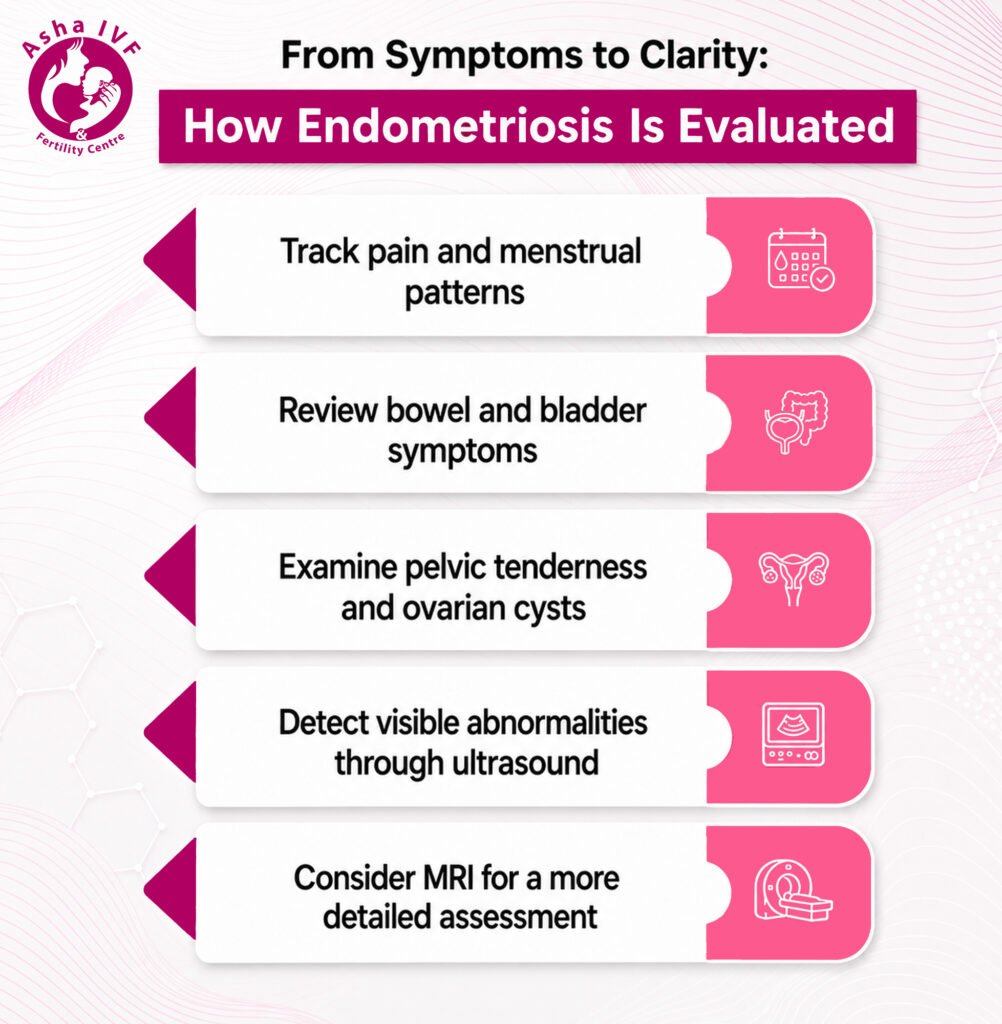
A doctor may begin by reviewing your menstrual history, pain patterns, bleeding, bowel and bladder symptoms, previous treatments, and pregnancy plans.
Evaluation may involve:
Pelvic Examination
A pelvic examination may help identify tenderness, ovarian cysts, scarring, or unusual changes around the reproductive organs.
Ultrasound
An ultrasound can help identify ovarian endometriomas and other pelvic conditions. However, it may not detect every form of endometriosis.
MRI Scan
MRI may be recommended when more detailed information about the location and extent of suspected endometriosis is needed.
Laparoscopy
In selected cases, laparoscopy may be used to directly examine the pelvic organs, identify lesions, and obtain tissue for testing.
A normal ultrasound does not always exclude endometriosis because small or superficial lesions may not be visible. Assessment depends on the complete clinical picture rather than one symptom or scan result.
When Should You See a Doctor?
Book a medical consultation when period or pelvic symptoms interfere with daily life, become progressively worse, or occur alongside:
- Pain during or after intercourse
- Painful urination or bowel movements
- Heavy or irregular menstrual bleeding
- Persistent bloating that follows your cycle
- Pelvic pain between periods
- Difficulty becoming pregnant
Seek urgent medical attention for sudden severe pain, fainting, uncontrolled bleeding, chest pain, breathing difficulty, or coughing up blood.
Listen to the Pattern, Not Just the Pain
Endometriosis does not have one fixed symptom profile. The strongest clue may be a recurring pattern: pain with each cycle, digestive or urinary concerns that worsen during periods, or fertility difficulties without a clear explanation.
You do not need to wait until the pain becomes unbearable before seeking help. If your symptoms are affecting your quality of life or you are concerned about conception, a timely fertility and gynaecological evaluation can provide greater clarity.
At Asha IVF, fertility specialists provide personalised assessments and fertility-focused care to help women understand their reproductive health and explore appropriate next steps based on their symptoms, medical findings, and parenthood goals.

Frequently Asked Questions
1. What are the earliest warning signs of endometriosis?
Early signs may include worsening period cramps, pelvic pain, painful intercourse, heavy bleeding, and bowel or urinary discomfort around menstruation.
2. How is endometriosis pain different from normal period cramps?
Endometriosis pain may begin before the period, last several days, worsen over time, or become severe enough to interrupt work, sleep, or daily activities.
3. Can endometriosis symptoms occur between periods?
Yes. Some women experience ongoing pelvic, abdominal, or lower-back pain even when they are not menstruating.
4. Are bowel and bladder changes signs of endometriosis?
Painful bowel movements, painful urination, bloating, constipation, or diarrhoea may be related, especially when they repeatedly worsen around periods.
5. What home remedies and products may help relieve early endometriosis pain?
Heating pads and doctor-approved over-the-counter pain relievers may provide temporary relief, but persistent or worsening pain should be evaluated by a doctor.
6. How can I find a specialist near me for endometriosis evaluation?
Look for a gynaecologist experienced in endometriosis and fertility care. Asha IVF also offers specialist evaluation and laparoscopic care for endometriosis-related fertility concerns.
7. Can endometriosis affect fertility even when symptoms are mild?
Yes. Some women first discover endometriosis during fertility testing, as symptom severity does not always reflect how extensively the condition affects reproductive organs.