
A period can arrive a few days early, feel heavier during a stressful month, or occasionally bring stronger cramps. Such changes are not always a cause for concern. However, when menstrual symptoms become persistent, unusually painful, or disruptive, they may be the body’s way of signalling an underlying health condition.
Period problems can develop at any reproductive stage, including after marriage, following childbirth, or during times of hormonal change. Knowing what is normal for your cycle, and recognising when that pattern changes, can help you seek timely care. This guide explains common menstrual concerns, possible causes, warning signs, and when consulting a gynecologist becomes important.
Understanding When a Period Pattern May Be Abnormal
A menstrual cycle is counted from the first day of one period to the first day of the next. Although cycles vary between individuals, a pattern that remains reasonably consistent for you is often more meaningful than comparing it with someone else’s cycle.
An occasional change may result from stress, travel, illness, changes in sleep, intense exercise, or weight fluctuations. Period problems deserve closer attention when the change continues across several cycles, becomes progressively worse, or affects your physical and emotional well-being.
Keeping track of cycle dates, flow, pain, spotting, and associated symptoms can help identify patterns and provide useful information during a gynecological consultation.
Common Period Problems and What They May Indicate
Menstrual concerns may affect the timing, duration, flow, or symptoms associated with a period. Some of the most common patterns include:
| Period problem | What you may notice | Possible contributing factors |
| Irregular periods | Cycles arrive unpredictably or vary considerably | PCOS, thyroid conditions, stress, weight changes or inconsistent ovulation |
| Heavy bleeding | Frequent pad changes, flooding, large clots or bleeding beyond seven days | Fibroids, adenomyosis, hormonal imbalance or a bleeding disorder |
| Painful periods | Cramps that interrupt work, sleep or routine activities | Endometriosis, adenomyosis, fibroids or pelvic infection |
| Missed periods | No period for several months when pregnancy is not the reason | PCOS, hormonal changes, low body weight, excessive exercise or ovarian concerns |
| Bleeding between periods | Spotting or bleeding outside the expected cycle | Ovulation, contraception, infection, polyps or cervical concerns |
| Very light or short periods | A noticeable and persistent reduction in flow | Hormonal contraception, stress, weight changes or changes in the uterine lining |
These symptoms do not confirm a diagnosis on their own. The timing, duration, severity, medical history, medicines, and possibility of pregnancy must all be considered.
Period Changes After Marriage and Delivery
Certain life stages can temporarily influence the menstrual cycle. However, persistent or severe changes should be discussed with a gynecologist.
After Marriage Period Problem
Marriage itself does not change menstruation, but stress, travel, changes in sleep or diet, contraception, and pregnancy concerns may affect cycle timing. Periods may become delayed or irregular, while some women may notice spotting after intercourse. Take a pregnancy test if your period is late and consult a gynecologist if irregularity continues, spotting recurs, or you experience pelvic pain or unusual discharge.
After Delivery Period Problem
Bleeding immediately after childbirth, known as lochia, is part of recovery and is not a period. Menstruation may return later during breastfeeding, and the first few cycles may be irregular, heavier, or lighter than before. Seek medical advice for persistent irregularity, severe pain, fever, foul-smelling discharge, dizziness, or unusually heavy bleeding. Ovulation can occur before the first postpartum period, so pregnancy may still be possible.
Why Menstrual Problems Develop
Period changes can arise from temporary hormonal disruption or an underlying medical condition. Common possibilities include:
- Polycystic ovary syndrome (PCOS): It may cause delayed or absent periods, acne, excess hair growth, and difficulty with ovulation.
- Thyroid disorders: Both an underactive and overactive thyroid can affect cycle timing and menstrual flow.
- Fibroids or uterine polyps: These non-cancerous growths may cause heavy, prolonged, or between-period bleeding.
- Endometriosis or adenomyosis: These conditions may lead to severe cramps, chronic pelvic pain, painful intercourse or heavy periods.
- Stress and lifestyle changes: Poor sleep, emotional stress, intensive exercise, and substantial weight change may temporarily affect ovulation.
- Medicines and contraception: Hormonal contraceptives, intrauterine devices, and certain medicines can change bleeding patterns.
- Pregnancy-related causes: A missed period or unexpected bleeding may be connected to early pregnancy and should be assessed appropriately.
Rarely, abnormal bleeding may be associated with changes in the cervix or uterine lining. Persistent or unexplained bleeding should therefore not be self-diagnosed.
When Period Problems Need a Gynecologist’s Attention
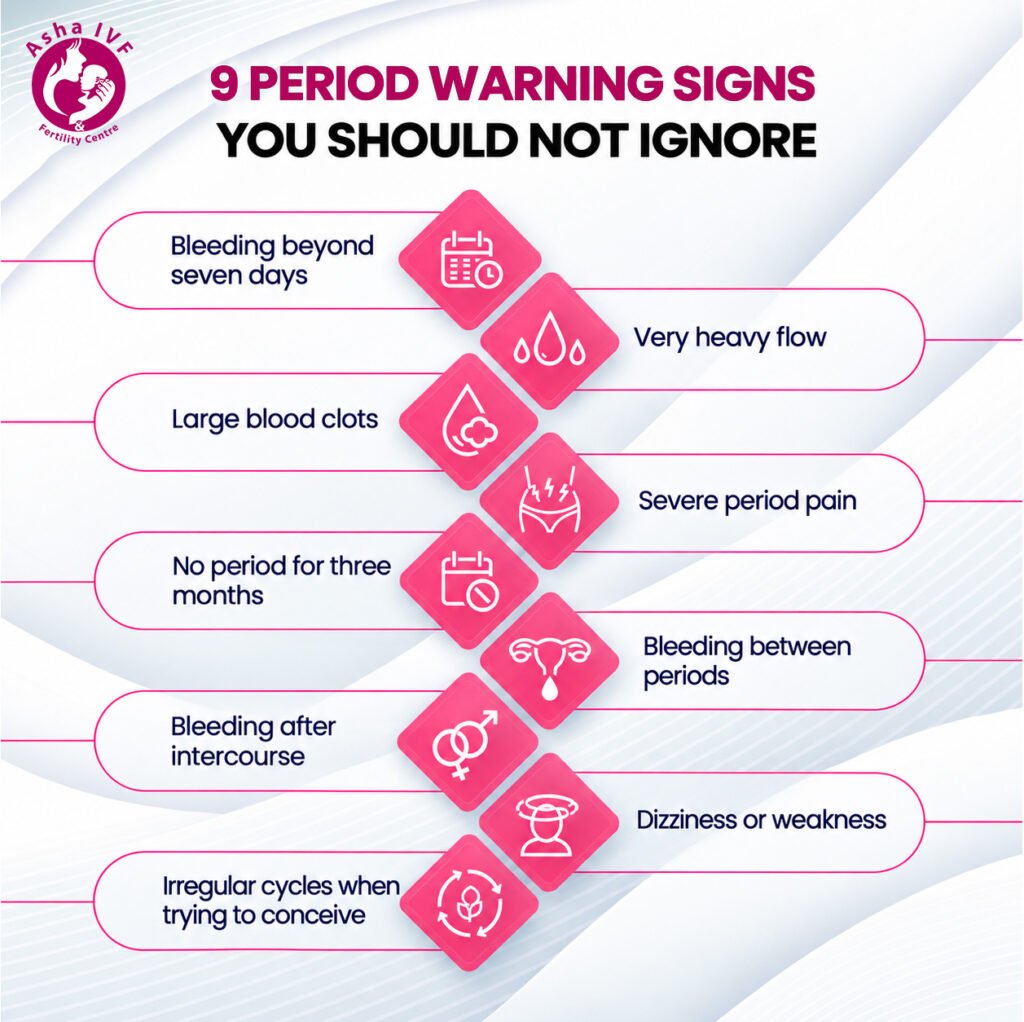
Schedule a gynecological consultation if:
- Periods repeatedly occur much earlier or later than expected.
- Menstrual bleeding regularly lasts longer than seven days.
- Bleeding is heavy enough to interfere with sleep or everyday activities.
- Periods stop for three months when you are not pregnant.
- Pain prevents you from working, studying, sleeping, or exercising.
- Cramps suddenly become more severe than usual.
- Spotting repeatedly occurs between periods or after intercourse.
- You experience pelvic pain, pain during sex, or unusual vaginal discharge.
- Period changes are accompanied by fatigue, breathlessness, dizziness, acne, excess hair growth, or major weight changes.
- Irregular cycles are affecting your attempts to conceive.
Seek urgent medical care for extremely heavy bleeding, fainting, severe weakness, breathing difficulty, intense or sudden pelvic pain, or bleeding with a positive pregnancy test. Heavy postpartum bleeding, particularly when accompanied by dizziness or weakness, also requires immediate attention.
What to Expect During a Gynecological Evaluation
The consultation usually begins with questions about cycle timing, bleeding, pain, contraception, pregnancy possibility, medicines, childbirth history, and related symptoms. A physical or pelvic examination may be recommended depending on the concern.
Tests are selected according to the symptoms and may include:
- A pregnancy test
- A complete blood count to check for anaemia
- Thyroid or other hormone tests
- A pelvic ultrasound
- Tests for infection
- Cervical screening when appropriate
- Further evaluation of the uterine lining in selected cases
Treatment depends on the cause, symptom severity, age, general health, and future pregnancy plans. Options may include lifestyle support, iron supplementation, medicines to reduce bleeding or pain, hormonal treatment, infection management, or procedures for structural conditions.
Early evaluation can also be valuable when irregular ovulation or another menstrual condition may be affecting fertility.
Understanding Your Period Is the First Step Towards Better Health
Not every change in menstruation indicates a serious condition, but recurring period problems should not be normalised when they disrupt daily life or differ significantly from your usual pattern. Tracking your periods and associated symptoms can make it easier to recognise meaningful changes and seek care at the right time.
Whether concerns begin unexpectedly, after marriage, or following delivery, a gynecological evaluation can help identify the cause and guide suitable treatment. At Asha IVF, women can receive personalised support for menstrual, hormonal, and fertility-related concerns, helping them understand their reproductive health and make informed decisions about the next stage of care

Frequently Asked Questions
Q1. What is the 7-2-1 rule for menstruation?
The 7-2-1 rule is a simple way to recognise possible heavy menstrual bleeding. It refers to periods lasting longer than 7 days, changing a pad or tampon more often than every 2 hours, or passing blood clots larger than 1 inch. Experiencing any one of these signs is a reason to consult a gynecologist. This is a screening guide, not a diagnosis.
Q2. What are the warning signs you should see a gynecologist?
See a gynecologist if you have very heavy bleeding, severe or worsening cramps, periods lasting beyond seven days, bleeding between periods, bleeding after intercourse, or no period for three months. Period problems accompanied by dizziness, weakness, pelvic pain, fever, or unusual discharge also require medical attention.
Q3. Can a gynecologist treat period problems?
Yes. A gynecologist can identify and treat period problems caused by hormonal imbalances, PCOS, thyroid disorders, fibroids, endometriosis, infections, or other conditions. At Asha IVF, menstrual concerns are evaluated according to the symptoms, medical history, and reproductive goals of each woman so that suitable treatment and fertility guidance can be provided.
Q4. What are signs of an unhealthy period?
Possible signs include extremely heavy or prolonged bleeding, large blood clots, severe pain, frequently missed periods, repeated spotting, or cycles that remain highly unpredictable. Feeling faint, unusually tired, or breathless during menstruation may indicate anaemia caused by excessive blood loss and should be assessed by a doctor.
Q5. Should I go to the gynecologist if my period is irregular?
Yes, if irregular periods continue for several cycles, stop for three months, or occur with heavy bleeding, severe pain, acne, excess facial hair, weight changes, or difficulty conceiving. One delayed cycle may result from stress or illness, but recurring irregularity may indicate PCOS, thyroid dysfunction, inconsistent ovulation, or another underlying concern.