
Breastfeeding increases the nutritional demands on a mother’s body. Along with supporting milk production, the body is also recovering after pregnancy and childbirth, making a balanced and nourishing diet especially important during this period.
The best diet for breastfeeding is not based on one special food or a restrictive meal plan. A lactating mother should focus on a varied diet that includes whole grains, protein-rich foods, fruits, vegetables, calcium-rich foods, healthy fats, and sufficient fluids.
According to the ICMR-National Institute of Nutrition, women require additional energy and protein during the first six months of lactation to meet the increased nutritional demands of breastfeeding. Individual needs, however, can vary depending on activity levels, nutritional status, and other health factors.
Why Is a Healthy Diet Important During Breastfeeding?
A nutritious diet during lactation helps provide the mother with the energy and nutrients needed during postpartum recovery and breastfeeding. Rather than simply increasing the quantity of food, the focus should be on improving its overall nutritional quality.
A balanced diet for a lactating mother should include different food groups throughout the day. There is generally no need to follow a highly restrictive diet or avoid common foods unless there is a medical reason to do so.
What Is the Best Diet for a Breastfeeding Mother?
The best diet for breastfeeding mothers includes a healthy combination of complex carbohydrates, protein, vegetables, fruits, dairy or suitable alternatives, nuts, seeds, and healthy fats. Choosing a variety of foods can help meet increased nutritional requirements without depending excessively on supplements or so-called lactation foods.
Here are the major food groups to include:
1. Whole Grains and Complex Carbohydrates
Carbohydrates provide energy, which is especially important during breastfeeding. Instead of depending mainly on refined foods, choose nutrient-rich options such as:
- Whole-wheat roti
- Brown or regular rice
- Oats and daliya
- Millets such as ragi and bajra
- Whole-grain bread
- Poha and upma
Whole grains also provide fibre and can help make meals more filling.
2. Protein-Rich Foods
Protein becomes particularly important during lactation. ICMR-NIN recommends additional protein during the breastfeeding period.
Good protein sources include:
- Dal and pulses
- Rajma and chole
- Paneer and curd
- Soybeans and tofu
- Eggs
- Fish
- Lean chicken or meat
Vegetarian mothers can combine different pulses, dairy products, soy, nuts and seeds to increase the variety of protein sources in their diet.
3. Fruits and Vegetables
Include seasonal fruits and vegetables of different colours throughout the day. Green leafy vegetables, carrots, pumpkin, tomatoes, citrus fruits, guava, papaya and other seasonal produce can provide important vitamins, minerals, antioxidants and fibre.
Whenever possible, choose whole fruits instead of relying mainly on packaged or sweetened fruit juices.
4. Milk and Calcium-Rich Foods
Calcium is an important part of a lactating mother’s diet. Milk, curd and paneer are convenient sources for many Indian families. Other options include ragi, sesame seeds, certain leafy vegetables and appropriate fortified foods.
Women who avoid dairy products should discuss suitable calcium sources with their doctor or dietitian.
5. Nuts, Seeds and Healthy Fats
A small portion of nuts or seeds can make a convenient nutrient-dense snack. Almonds, walnuts, peanuts, sesame seeds, and flax or chia seeds can be added to meals according to individual preference and tolerance.
Important Nutrients During Lactation
Rather than focusing only on calories, lactating mothers should pay attention to overall nutrient intake.
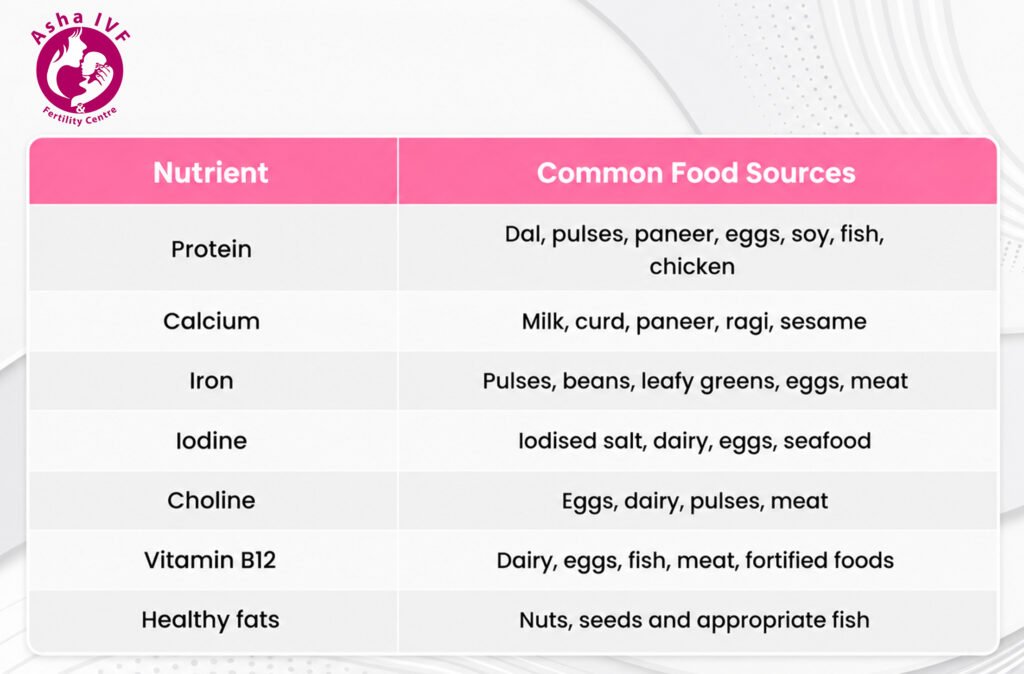
Iodine and choline requirements are particularly important during lactation, and women following vegetarian or vegan diets may need additional attention to nutrients such as vitamin B12, iron, iodine, zinc, and omega-3 fatty acids.
What Should a Lactating Mother Include in Her Daily Diet?
A lactating mother should focus on regular, balanced meals that include protein, whole grains, fruits, vegetables, calcium-rich foods, healthy fats, and adequate fluids.
A simple Indian meal pattern may include:
- Breakfast: Poha, oats or stuffed roti with curd, paneer or egg
- Mid-morning: Seasonal fruit with a handful of nuts
- Lunch: Roti or rice with dal, vegetables, curd and salad
- Evening snack: Roasted chana, makhana or sprouts
- Dinner: Roti or rice with dal, paneer, egg, fish or chicken and vegetables
Many mothers wonder how much water to drink while breastfeeding. There is no fixed amount for everyone, so it is generally advisable to drink regularly according to thirst and to include fluids such as water, milk, buttermilk, or soups.
Foods such as methi, ajwain, saunf, oats, and nuts are commonly included in postpartum diets. However, no particular food should be considered a guaranteed way to increase milk production. Mothers who are concerned about their milk supply are advised to discuss feeding frequency, latch, and other possible factors with a doctor or lactation professional.
Supplements such as iron, calcium, vitamin D, or vitamin B12 may also be advised in some cases, depending on individual nutritional requirements and medical history.
What Should a Breastfeeding Mother Limit or Avoid?
Most breastfeeding mothers do not need to follow a highly restrictive diet. However, certain foods and drinks are generally advised to be consumed in moderation or with additional care:
- Excess caffeine: High intake of coffee, tea, and other caffeinated beverages is best limited.
- High-mercury fish: Mothers are advised to choose appropriate fish varieties and avoid those known to contain higher mercury levels.
- Highly processed foods: Foods high in added sugar, salt and unhealthy fats should be limited where possible.
- Sugary beverages: Water and other nutritious fluids are generally better everyday choices than heavily sweetened drinks.
- Unnecessary food restrictions: Spicy foods, pulses and other common foods do not always need to be removed from the diet unless there is a specific concern or medical recommendation.
There is also no universal list of foods that every breastfeeding mother must avoid completely. Dietary restrictions are best based on individual health needs, allergies, intolerances, or advice from a qualified healthcare professional.
Eat Well, Stay Nourished During Breastfeeding
A healthy diet for a lactating mother does not have to be complicated. Regular meals that include whole grains, protein-rich foods, fruits, vegetables, calcium-rich foods, healthy fats, and adequate fluids can help support the increased nutritional demands of breastfeeding.
Since every mother’s nutritional and health needs are different, persistent weakness, nutritional deficiencies, or other post-pregnancy health concerns should be discussed with a qualified doctor.
At Asha IVF, our experienced specialists provide personalised guidance for women at different stages of their reproductive journey. If you have concerns about your reproductive health, fertility, or future family planning after pregnancy, our team can help you understand the right next steps based on your individual health needs.

FAQs
1. What are the best protein powders suitable for lactating women?
There is no single best protein powder for breastfeeding mothers. If additional protein is needed, a doctor or dietitian may suggest a simple, good-quality protein supplement based on dietary intake and individual health needs.
2. What are the best iron-rich foods for breastfeeding mothers in India?
Iron-rich options include lentils, rajma, chickpeas, soybeans, green leafy vegetables, sesame seeds, eggs, and lean meats. Pairing plant-based iron foods with vitamin C-rich foods may help improve iron absorption.
3. What dietary supplements are recommended for lactating mothers in India?
Supplement needs vary between mothers. Depending on diet, deficiencies, and medical history, a doctor may recommend nutrients such as iron, calcium, vitamin D, vitamin B12, iodine, or omega-3 supplements.
4. Can a vegetarian mother get enough nutrition while breastfeeding?
Yes, a well-planned vegetarian diet can provide most required nutrients. However, extra attention may be needed for vitamin B12, iron, iodine, zinc, and omega-3 intake, particularly with more restrictive diets.
5. Should tea or coffee be avoided after iron-rich meals?
It is generally advised to avoid tea or coffee immediately with or after iron-rich meals, as they may reduce iron absorption. Including vitamin C-rich foods with the meal can support better absorption.
6. Are iodine and choline important during breastfeeding?
Yes. Requirements for iodine and choline increase during lactation, and foods such as eggs, dairy, pulses, iodised salt and certain seafood can help provide these nutrients.