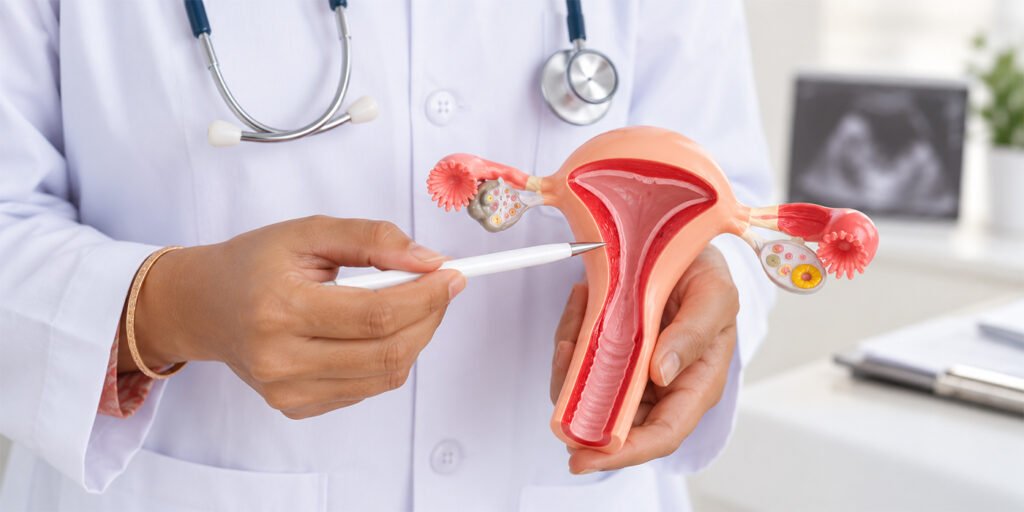
The uterine lining changes quietly throughout the menstrual cycle, preparing a soft, supportive place for an embryo to implant. When this lining remains thinner than expected, it may raise concerns about natural conception or the success of fertility treatment. However, a thin endometrium does not automatically rule out pregnancy.
Its significance depends on factors such as the stage of the cycle, hormonal response, uterine health, and embryo quality. This guide explains how endometrial thickness is assessed, the possible causes of a thin lining, and the treatment approaches a fertility specialist may consider.
Understanding the Role of Endometrial Thickness in Pregnancy
The endometrium is the tissue lining the uterus. Oestrogen helps it grow before ovulation, while progesterone prepares it for embryo implantation. If pregnancy does not occur, the lining sheds during menstruation.
Endometrial thickness is measured through a transvaginal ultrasound and interpreted according to the menstrual cycle stage. In fertility treatment, a lining below approximately 7 mm near ovulation or embryo transfer is often considered thin. However, there is no universally accepted cut-off. A thin endometrium may reduce implantation chances, but pregnancy and live birth are still possible.
Doctors may also assess:
- The appearance and pattern of the endometrium
- How the lining changes during the treatment cycle
- Blood flow to the uterus
- Hormonal response
- The condition of the uterine cavity
- Embryo quality and developmental stage
These factors help provide a more complete picture than endometrial thickness alone.
What Are the Possible Causes of a Thin Endometrial Lining?
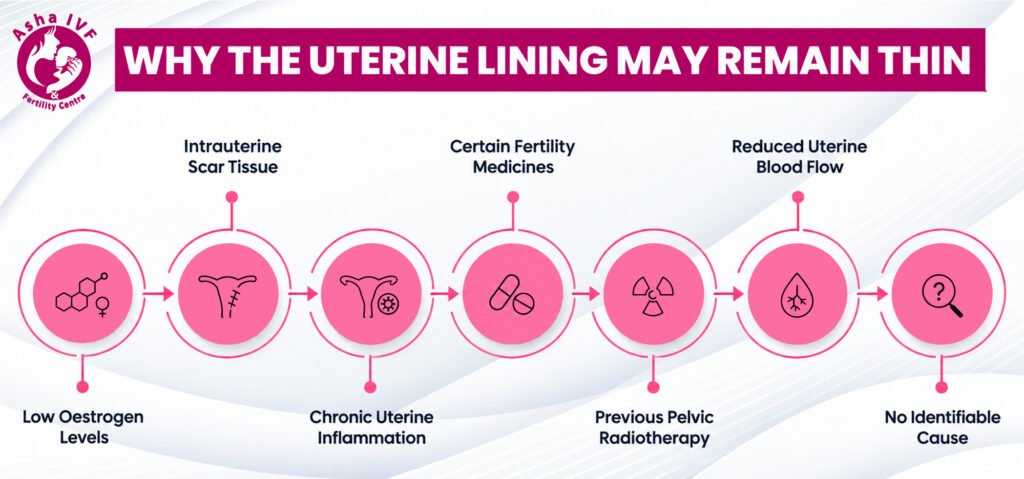
The causes of thin endometrial lining vary between patients. Sometimes, the lining may remain thin even when hormone levels and uterine findings appear normal.
Inadequate Oestrogen Activity
Oestrogen supports endometrial growth before ovulation. Low levels or a poor response to the hormone may result from irregular ovulation, diminished ovarian reserve, hormonal conditions, or certain fertility treatment cycles.
Scar Tissue Within the Uterus
Intrauterine adhesions, also called Asherman syndrome, can restrict the development of a healthy uterine lining. They may form following pregnancy-related curettage, uterine surgery, or infection.
Infection or Chronic Inflammation
Chronic endometritis is persistent inflammation of the uterine lining, sometimes linked to bacterial infection. It may occur without noticeable symptoms but can affect endometrial function.
Medicines and Medical Treatments
Repeated clomiphene citrate use may temporarily limit endometrial growth in some patients. Pelvic radiotherapy or treatments that damage endometrial tissue may also affect its development.
Reduced Uterine Blood Flow
Reduced circulation may limit the delivery of hormones, oxygen, and nutrients to the endometrium, although its precise role is still being studied.
No Identifiable Cause
When tests reveal no clear reason, the condition may be described as unexplained thin endometrium. Management is then guided by the patient’s fertility history and treatment response.
Can You Get Pregnant With a Thin Uterine Lining?
A thin uterine lining may reduce the likelihood of embryo implantation, particularly during IVF or frozen embryo transfer, but it does not make pregnancy impossible. Endometrial receptivity also depends on hormonal timing, embryo development, and embryo-endometrium interaction. A lining below 7 mm cannot predict failure, just as thickness cannot guarantee success.
The effect of a thin lining should therefore be considered alongside:
| Factor | Why It Matters |
| Age and ovarian reserve | These may affect egg number and quality |
| Embryo quality | A healthy embryo is an important part of successful implantation |
| Hormone levels | Oestrogen and progesterone support lining development and receptivity |
| Uterine cavity | Polyps, fibroids, or adhesions may interfere with implantation |
| Previous treatment response | Past ultrasound measurements help identify persistent or cycle-specific concerns |
| Timing of transfer | The embryo and endometrium need to be developmentally synchronised |
If pregnancy occurs with a very thin lining, the treating doctor may recommend appropriate monitoring based on the patient’s medical and obstetric history.
From Evaluation to Treatment: How a Thin Endometrium May Be Managed
Treatment begins with confirming whether the endometrium is consistently thin and identifying any correctable cause. One low measurement, particularly early in the cycle, may not require treatment.
A detailed fertility evaluation
Depending on the patient’s history, evaluation may include:
- Serial transvaginal ultrasounds: These show how the lining develops across the cycle.
- Hormone tests: Oestrogen and other reproductive hormones may be checked when indicated.
- Saline sonography or hysteroscopy: These procedures help identify adhesions, polyps, fibroids or other abnormalities inside the uterus.
- Testing for chronic endometritis: An endometrial biopsy or other investigation may be advised in selected cases.
- Review of previous treatment cycles: Medication type, dose, duration and endometrial response can guide future planning.
Treatment based on the underlying cause
The fertility specialist may consider:
- Adjusting the dose, route or duration of oestrogen during a frozen embryo transfer cycle
- Using a different ovarian stimulation or endometrial preparation protocol
- Replacing clomiphene with another ovulation-induction medicine when clinically appropriate
- Treating confirmed chronic endometritis with suitable antibiotics
- Removing significant intrauterine adhesions through hysteroscopy
- Delaying embryo transfer and freezing embryos if the lining is considered unsuitable during that particular cycle
Some clinics offer treatments such as PRP, G-CSF, or sildenafil for persistent thin endometrium, but evidence remains limited, and these options are not suitable for everyone. Patients should avoid hormonal medicines, aspirin, or supplements without medical guidance, as no specific food or remedy has been proven to correct a persistently thin lining.
Moving Forward With a Clearer Understanding of Your Uterine Health
A thin endometrium can influence implantation, but the measurement should never be considered in isolation. The timing of the scan, changes across the cycle, hormone levels, uterine cavity and overall fertility profile all help determine its clinical importance. Pregnancy may still be possible, naturally or with fertility treatment, although individual chances vary.
If your lining remains thin across several cycles, a structured evaluation can help identify hormonal concerns, adhesions, inflammation or treatment-related factors. At Asha IVF, fertility specialists can assess your medical history, review your endometrial response and recommend an appropriate next step based on your circumstances.
The aim is to make treatment decisions carefully, using the complete fertility picture rather than relying on a single ultrasound number.

Frequently Asked Questions
1. Can I get pregnant naturally with a thin endometrium?
Yes, natural pregnancy is possible. Endometrial thickness is only one of several factors influencing implantation and conception.
2. What endometrial thickness is considered too thin for pregnancy?
There is no universal cut-off, but a lining below approximately 7 mm near ovulation or embryo transfer is often considered thin.
3. Does a thin uterine lining always cause implantation failure?
No. It may reduce implantation chances, but embryo quality, hormonal timing, and overall endometrial health also affect the outcome.
4. What symptoms may indicate a thin endometrial lining?
A thin lining often causes no symptoms, although some women may have light or short periods. An ultrasound is required for assessment.
5. Can a thin endometrium become thicker with treatment?
Yes, depending on the cause. Treatment may involve hormonal support or addressing uterine adhesions, inflammation, or other underlying concerns.
6. Should embryo transfer be cancelled if the lining is below 7 mm?
Not necessarily. The decision depends on the lining, embryo quality, treatment history, and individual circumstances assessed by the fertility specialist.