
After weeks of injections, scans, and waiting, a negative pregnancy test can leave you with one question: what went wrong? You may replay every decision or wonder whether another attempt would be different.
The causes of IVF failure cannot always be narrowed down to one clear explanation. Sometimes, the previous cycle reveals a concern worth addressing. Sometimes, treatment does not result in pregnancy despite an apparently appropriate plan. Before deciding what comes next, your doctor can review how each stage progressed.
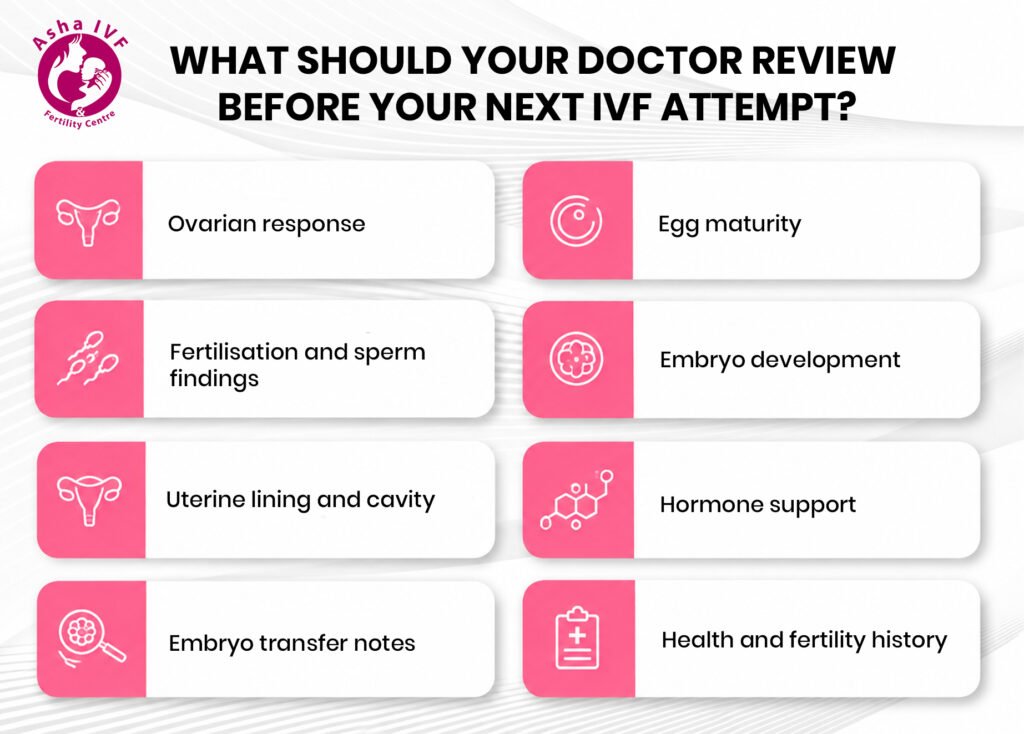
These eight areas can help you understand that discussion and prepare questions without assuming that you need every available test.
The Causes of IVF Failure Depend on Where the Cycle Stopped
Understanding why IVF fails starts with recognising that an unsuccessful cycle does not always involve implantation failure. Treatment may stop before egg collection, fertilisation may not occur, or embryos may stop developing before transfer. In other cases, a transfer takes place but does not result in pregnancy. Identifying that stage helps your doctor assess the possible causes of IVF failure and focus the review.
A positive pregnancy test followed by pregnancy loss is a different outcome from a negative test after transfer. Tell your doctor exactly what happened rather than grouping both under “IVF failure”.
One unsuccessful transfer does not, by itself, establish recurrent implantation failure. Assessment depends on your individual circumstances and previous transfers.
Eight Areas Your Doctor May Review Before Another Attempt
Possible IVF failure reasons should be considered alongside your treatment records. These are review areas, not eight diagnoses or a checklist of tests everyone needs.
1. How Your Ovaries Responded to Stimulation
Your doctor may compare the medicines used, scan findings, and number of eggs collected. A cycle with fewer eggs than expected raises different questions than one paused because of an excessive response. This helps guide a discussion about whether to adjust the next stimulation plan.
2. How Many Collected Eggs Were Mature
The number of eggs collected is only part of the picture. Your doctor may examine how many were mature and suitable for fertilisation. Ask for these numbers separately so you can understand where the drop occurred, rather than treating the final embryo count as the only result.
3. Fertilisation Results and Sperm Findings
When few eggs fertilise, your doctor may investigate possible IVF failure reasons by reviewing semen results and whether conventional IVF or ICSI was used. ICSI involves injecting a sperm directly into an egg. Discuss whether a change has a specific medical justification; it should not be treated as a guaranteed solution after one unsuccessful cycle.
4. Embryo Development and the Limits of Grading
The embryology report shows how embryos developed and which were suitable for transfer or freezing. A good grade describes appearance and development, but cannot guarantee pregnancy. An embryo that looks suitable may still have problems that are not visible through grading. This can help explain why IVF fails even after a reassuring embryo report.
5. The Uterine Lining and Cavity
Your doctor may revisit scans of the uterine lining and look for concerns such as polyps, scar tissue, or fibroids affecting the cavity. Further investigation depends on what is already known and whether findings could change treatment. An unsuccessful transfer does not automatically mean the uterus is unable to support pregnancy.
6. Hormone Preparation and Progesterone Support
Your doctor may review how the lining was prepared and the timing of progesterone, a hormone used to support the lining around transfer. Share your prescription and any difficulties taking it as instructed. This allows an accurate review without assuming that a medication issue caused the outcome.
7. The Embryo Transfer Record
The transfer notes can help your doctor check whether the procedure was straightforward or technically difficult. These notes form one part of the wider assessment of possible IVF failure reasons. A transfer that appeared to go smoothly still cannot guarantee implantation, just as an unsuccessful outcome alone does not prove a procedural problem.
8. Underlying Health and Fertility History
Age, the original infertility diagnosis, and relevant medical conditions may influence the next plan. Your doctor may revisit uterine conditions, hormonal findings, and either partner’s history. Share any new diagnosis or treatment since your last assessment. Reviewing the possible causes of IVF failure helps identify relevant medical factors without assigning blame to either partner.
Make the Next Decision With Your Previous Cycle in View
Reviewing why IVF fails in an individual case may guide a treatment adjustment, targeted investigation, or another attempt without major changes. More intervention is not automatically better.
Before agreeing to extra tests or treatment add-ons, ask:
- What concern is this intended to investigate or treat?
- Would the result change my treatment plan?
- What evidence supports its use in my circumstances?
- What are the risks and additional costs?
Some add-ons have limited evidence, and their usefulness can differ between patient groups. Ask about the chance of having a baby, rather than relying only on claims about implantation or laboratory results.
You do not have to commit to another cycle at the review appointment. Physical recovery, emotional readiness and finances belong in the discussion too.
Give Your Next Attempt a Clearer Starting Point
The causes of IVF failure may remain unclear even after a detailed review of an unsuccessful cycle. The useful starting point is a clear account of what happened, what your doctor can reasonably learn from it, and which changes have a medical basis. Bring your stimulation prescription, scans, egg collection details, embryology report, and transfer notes to the appointment.
Book a consultation with the fertility team at Asha IVF to discuss your previous cycle and the options that may suit your situation. Prepare two or three questions that matter most to you, including what another attempt would involve and whether any additional expense is justified.
Taking time to recover or seek a second opinion is also a valid choice. Your next decision should reflect both the medical picture and what you feel ready to undertake.

FAQs
1. What are the common causes of IVF failure in women over 35?
Age-related changes in egg quality and a higher likelihood of chromosome abnormalities in embryos can contribute. Ovarian response, sperm factors, and uterine conditions may also matter, so age alone cannot explain an unsuccessful cycle.
2. What diagnostic tests are recommended after multiple IVF failures?
Testing depends on where previous cycles stopped and what the records show. Your doctor may consider uterine imaging, selected hormone tests, or further assessment of either partner; there is no single test panel appropriate for everyone.
3. What role do embryo quality and grading play in IVF failure?
Grading helps assess an embryo’s appearance and development, but cannot confirm its chromosome status or guarantee implantation. A good-quality embryo can still fail to result in pregnancy.
4. Can lifestyle changes improve the chances of success after failed IVF?
Stopping smoking, avoiding alcohol and addressing weight or medical concerns can support preparation for treatment. These changes cannot guarantee success or establish that lifestyle caused the previous cycle to fail.
5. Can supplements or medications prevent another IVF failure?
No supplement or medication can guarantee this. Medicines should address a specific treatment need, while supplements should follow medical advice; folic acid supports pregnancy preparation but is not a treatment for IVF failure.
6. Are immune-related tests and treatments recommended after IVF failure?
Routine immune testing and treatments such as steroids or intralipids are not recommended for otherwise healthy patients solely because IVF failed. A diagnosed immune condition requires separate specialist care.
7. Can I consult Asha IVF after repeated unsuccessful IVF cycles?
You can book a consultation with Asha IVF’s fertility team to discuss your previous treatment and possible next steps. Bring your cycle records, embryology reports, and transfer details to support the discussion.