
For many couples starting IVF, the biggest hope is simple: “Let it work in the first attempt.”
And that hope is completely natural. After months or years of trying, tests, medicines, and emotional pressure, IVF can feel like the final answer. The truth is, IVF is advanced and effective, but it does not guarantee 100% success in a single cycle.
The IVF success rate depends on age, egg quality, sperm health, embryo quality, uterine condition, lifestyle, and the expertise of the fertility team. Some couples conceive in the first cycle, while others may need a revised plan and another attempt.
So, what really affects IVF success, and when should couples keep trying? Let’s understand the real picture.
What Is the Success Rate of IVF?
The success rate of IVF refers to the chances of achieving pregnancy or a live birth after an IVF cycle. It is not the same for every couple. Some couples may conceive in the first cycle, while others may need two or more attempts.
In general, IVF success is higher in younger women, especially when egg quality, sperm quality, embryo development, and uterine health are favourable. However, even with good embryos and expert care, implantation is a natural biological process and cannot be guaranteed every time.
That is why IVF should be seen as a planned fertility journey rather than a one-cycle promise.
Why IVF May Not Work in the First Attempt?
A failed first IVF cycle can feel disappointing, but it does not always mean IVF will not work for you. In many cases, the first cycle helps doctors understand your body’s response better and refine the next plan.
Some common reasons IVF may not work in one attempt include:
- Poor egg or sperm quality that affects fertilisation or embryo development
- Chromosomal abnormalities in the embryo that may prevent implantation
- Thin endometrial lining or uterine issues such as fibroids, polyps, or adhesions
- Hormonal imbalance or underlying conditions like PCOS, endometriosis, or thyroid problems
With the right evaluation, the treatment protocol can often be adjusted for the next cycle. This may improve the overall IVF success rate and help couples move forward with more clarity.
Factors That Affect IVF Success Rate
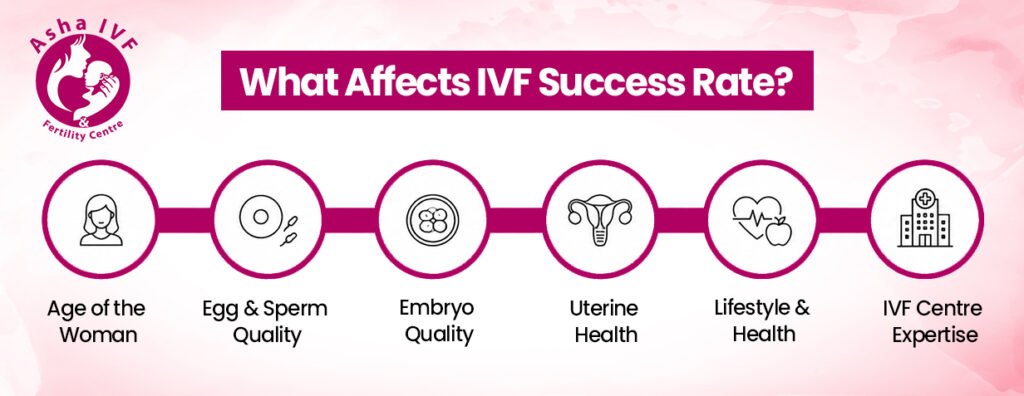
The IVF treatment success rate is not decided by one factor alone. It depends on how the eggs, sperm, embryos, uterus, lifestyle, and treatment plan work together during the cycle.
Here are the key factors that can influence the success rate of IVF:
1. Age of the Woman
Age is one of the strongest factors affecting the IVF success rate. Women below 35 usually have better egg quality and a higher ovarian reserve. After 35, fertility starts declining more noticeably, and after 40, the chances may reduce further when using self-eggs.
This does not mean IVF cannot work after 35 or 40, but it may require a more personalised approach.
2. Egg and Sperm Quality
Healthy eggs and sperm are essential for forming good-quality embryos. Low AMH, poor ovarian reserve, abnormal sperm count, low motility, or sperm DNA fragmentation can affect fertilisation and embryo development.
Both partners should be evaluated before IVF so that the right treatment plan can be created.
3. Embryo Quality
A good-quality embryo has a better chance of implantation, but embryo grading alone does not guarantee pregnancy. Sometimes, even a visually good embryo may not implant due to chromosomal or uterine factors.
Advanced lab support, embryo monitoring, and expert embryology care play an important role here.
4. Uterine Health
For pregnancy to happen, the embryo must implant in a healthy uterus. Conditions such as fibroids, polyps, adhesions, infections, or a thin endometrium may reduce the chances of success.
Doctors may recommend tests like ultrasound, hysteroscopy, or hormonal evaluation before embryo transfer.
5. Lifestyle and Overall Health
Smoking, alcohol, obesity, unmanaged diabetes, thyroid imbalance, stress, poor sleep, and unhealthy diet can affect fertility outcomes. Improving lifestyle before and during IVF can support better results.
Even small changes like maintaining a healthy weight, taking prescribed supplements, reducing stress, and following medical advice can help.
6. Expertise of the IVF Centre
The clinic you choose matters. An experienced IVF team, advanced fertility lab, skilled embryologists, transparent counselling, and personalised treatment protocols can influence the outcome.
If you are looking for an IVF centre in Faridabad, choose a clinic that explains your diagnosis clearly, offers ethical guidance, and does not promise unrealistic guarantees.
Planning IVF at a later age? Read our guide on IVF success rate after 40 to understand your chances and options better.
Does More Than One IVF Cycle Improve the Chances?
Yes, for many couples, cumulative success improves across multiple IVF cycles. This is because each cycle helps doctors understand the body’s response better and make improvements in stimulation, embryo selection, transfer timing, or supportive treatment.
However, the number of cycles needed depends on age, fertility diagnosis, embryo availability, and overall health. Your fertility specialist can guide you on whether to continue with another cycle, change the protocol, or consider options like donor eggs, donor sperm, ICSI, or embryo freezing.
How Asha IVF Supports Couples Through IVF
At Asha IVF, we understand that IVF is not just a medical procedure; it is an emotional journey. Our team focuses on clear counselling, personalised fertility evaluation, advanced lab support, and compassionate care at every step.
As a trusted IVF centre in Faridabad, Asha IVF offers fertility treatments for both male and female infertility, including IVF, ICSI, fertility testing, embryo transfer, and advanced reproductive care. Our specialists work closely with couples to identify the right treatment approach instead of giving one-size-fits-all solutions.
Final Thoughts
IVF does not guarantee a 100% success rate in a single attempt, and no ethical fertility clinic should promise that. But with the right diagnosis, expert care, advanced technology, and a personalised treatment plan, IVF can offer strong hope to couples struggling with infertility.
If you are planning IVF or have faced a failed cycle, do not lose hope. Speak to an experienced fertility specialist, understand your case clearly, and take the next step with confidence.
Book a consultation at Asha IVF and get personalised guidance for your IVF journey.

FAQs
1. Can I get a home-based fertility assessment before opting for IVF?
Yes, basic fertility counselling can begin online, but tests like AMH, semen analysis, ultrasound, and hormonal evaluation need clinical confirmation.
2. Can I book a consultation for IVF treatment online?
Yes, you can book an online IVF consultation to discuss your history, reports, concerns, and possible treatment options with a specialist.
3. What is the average success rate of IVF clinics in India?
The average IVF success rate in India varies by age, diagnosis, embryo quality, clinic expertise, and whether self or donor eggs are used.
4. Is a 100% IVF success rate possible in one cycle?
No, IVF cannot guarantee 100% success in one cycle because implantation depends on multiple biological, medical, and embryo-related factors.
5. How can I improve my chances of IVF success?
You can improve IVF chances by following medical advice, maintaining a healthy weight, avoiding smoking, managing stress, and treating hormonal issues early.
6. When should I visit an IVF centre in Faridabad?
You should visit an IVF centre in Faridabad if you have been trying for a pregnancy without success for 12 months or more.