For couples struggling with infertility, the path to parenthood can often seem uncertain and overwhelming. One of the most common concerns is deciding whether to start with IUI (Intrauterine Insemination) treatment or IVF (In Vitro Fertilization). This decision is deeply personal and guided by several factors that fertility specialists take into account.
At Asha IVF, we believe in a compassionate, doctor-led approach that ensures the best fertility treatment options tailored to your needs. Both IUI and IVF are effective options, but knowing which one is right for you requires a deep understanding of your unique situation. Let’s break down the differences between these two treatments and how our experienced doctors decide the most suitable starting point for each couple.
Key Overview
- Comparison of IUI and IVF: The blog explains the differences between IUI (Intrauterine Insemination) and IVF (In Vitro Fertilization), including their procedures, success rates, and ideal candidates.
- Personalized Fertility Decisions: Asha IVF doctors base treatment decisions on factors like age, ovarian reserve, infertility causes, and previous treatments, ensuring a tailored approach for each couple.
- Success Rates: IUI has lower success rates (10–20% per cycle for women under 35), while IVF generally offers higher success rates (70–75% for women under 35).
- Emotional, Financial & Lifestyle Considerations: Doctors take into account emotional readiness, financial factors, and work-life balance when recommending IUI or IVF.
What Is IUI Treatment?
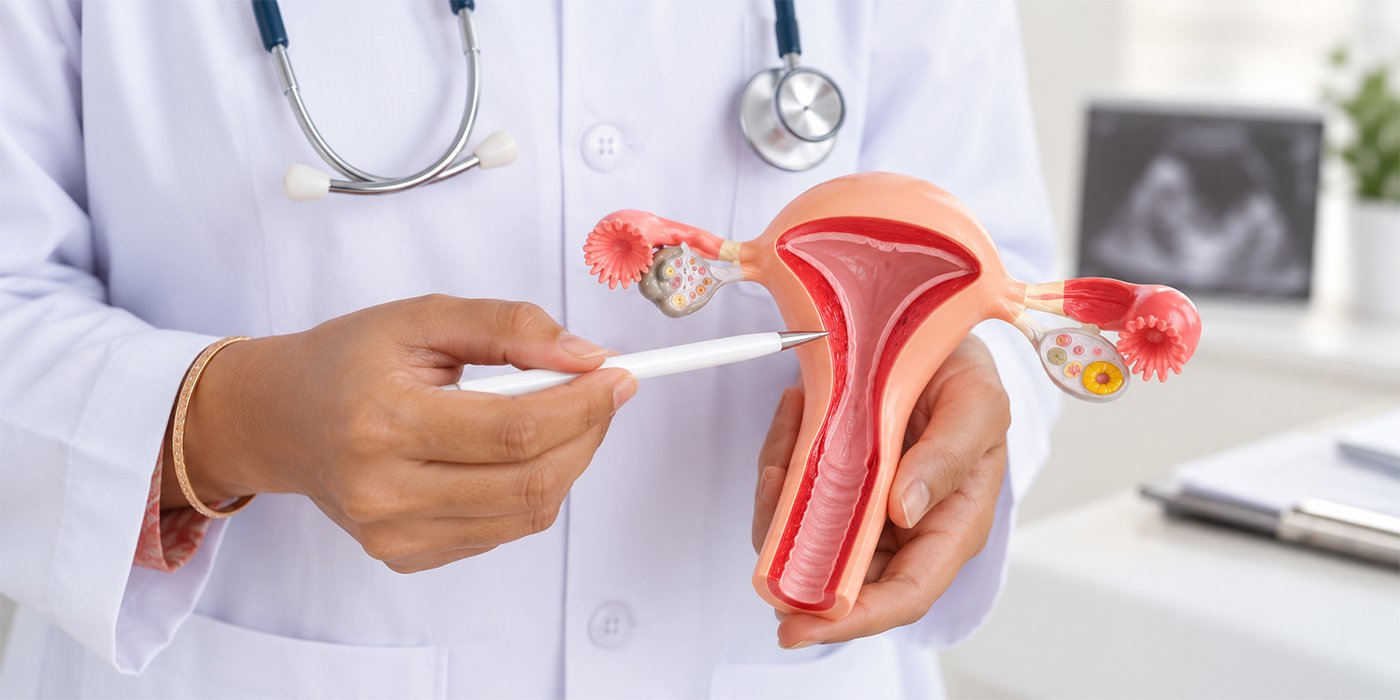
IUI, or Intrauterine Insemination, is a fertility treatment where sperm is directly inserted into a woman’s uterus around the time of ovulation. This method increases the number of sperm reaching the egg, improving the chances of fertilization.
Who Is an Ideal Candidate for IUI?
IUI treatment is typically recommended for couples facing mild infertility issues. The ideal candidates include:
- Unexplained infertility
- Mild male factor infertility
- Ovulation issues
IUI Success Rate
The success of IUI largely depends on the woman’s age and the underlying cause of infertility. Here’s a breakdown of IUI success rates by age according to American Pregnancy Association
- Under 35: 10–20% per cycle
- 35–37: 5–10% per cycle
- Over 38: 3–5% per cycle
What Is IVF Treatment?
IVF, or In Vitro Fertilization, is a more advanced treatment where eggs are retrieved from the ovaries and fertilized with sperm in a lab. The resulting embryos are then transferred to the uterus for implantation.
Conditions Where IVF Is Recommended
IVF treatment is often the best option for couples with more complex fertility challenges. Conditions where IVF is recommended include:
- Blocked fallopian tubes
- Severe male infertility
- Endometriosis
- Repeated failed IUI cycles
IVF Success Rate
IVF has higher success rates compared to IUI, but it also depends on factors like age and ovarian reserve. IVF success rates according to SART are generally:
- Under 35: 40–45% per cycle
- 35–37: 30–35% per cycle
- 38–40: 20–25% per cycle
- Over 40: 10–15% per cycle
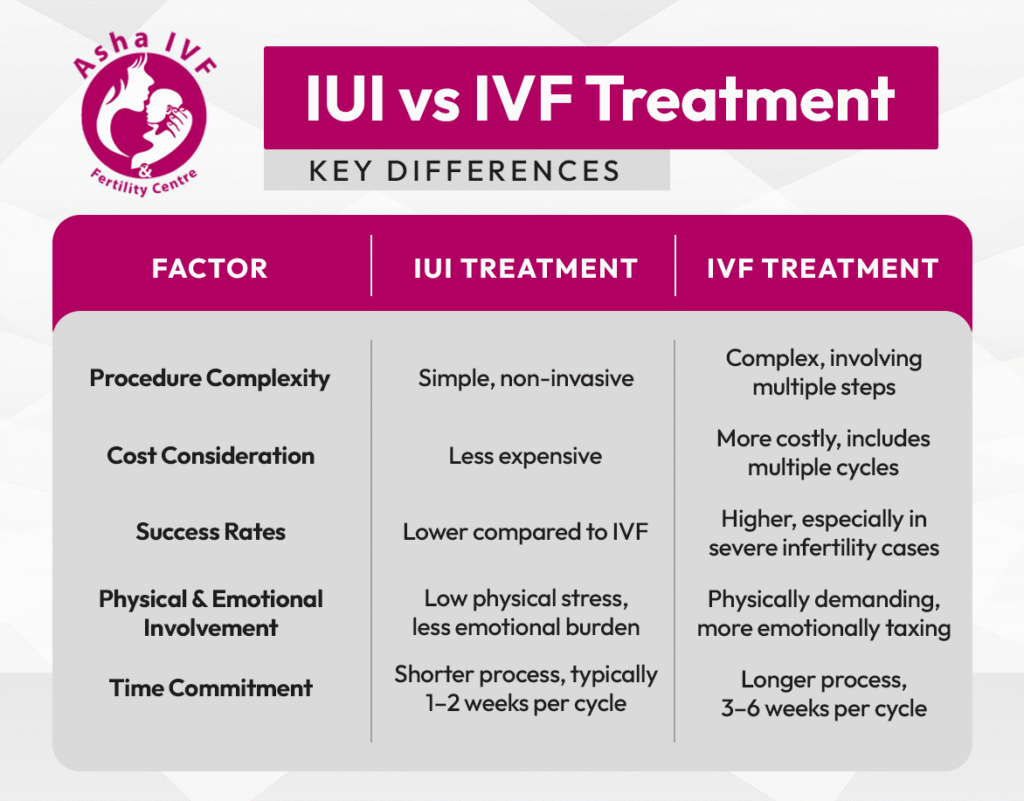
IUI Treatment vs IVF – Key Differences
Where Does ICSI Fit in the IUI vs IVF Decision?
In some cases, even IVF may not be enough on its own; this is where ICSI (Intracytoplasmic Sperm Injection) becomes an important option. ICSI is an advanced form of IVF in which a single healthy sperm is directly injected into the egg, improving fertilization chances when sperm count, motility, or morphology is significantly compromised, or when previous IVF cycles have failed. Many couples are advised to move from conventional IVF to ICSI based on detailed semen analysis, fertilization history, or specific medical conditions.
To understand why doctors recommend ICSI instead of standard IVF in certain cases, read our detailed guide.
How Asha IVF Doctors Decide the Right Starting Point
Fertility specialists at Asha IVF assess several factors when determining whether IUI or IVF is the best starting point for each couple. These factors include:
- Woman’s Age & Ovarian Reserve
Age is one of the most significant factors in fertility treatment decisions. A woman’s ovarian reserve (the number and quality of eggs) significantly influences the chances of success with both IUI and IVF.
- Cause of Infertility
The root cause of infertility plays a crucial role in the decision-making process. For example, if the issue is related to ovulation or mild male infertility, IUI may be the first step. However, more complex causes like blocked fallopian tubes often require IVF.
- Duration of Trying to Conceive
If a couple has been trying to conceive for a long time without success, doctors may recommend IVF, as it has a higher success rate in these cases.
- Previous Fertility Treatments
For couples who have undergone previous fertility treatments, the results (e.g., failed IUI) will guide the next steps. IVF might be suggested if IUI was unsuccessful.
- Male Partner’s Sperm Health
If the male partner has poor sperm quality or low sperm count, IVF may be recommended, especially if sperm retrieval through IUI is not viable.
- Hormonal & Ultrasound Findings
Tests like ultrasound, blood tests, and semen analysis help doctors determine the best treatment. Low ovarian reserve or issues like PCOS could make IVF a better option.
When IUI Treatment Is Often Recommended First
IUI is commonly recommended in cases of:
- Unexplained infertility: When no obvious cause is found for the couple’s infertility.
- Mild male factor infertility: When sperm count or quality is slightly below average.
- Ovulation-related issues: When ovulation is irregular but not absent.
- Cervical factor infertility: When there is an issue with the cervix that prevents sperm from entering the uterus.
When IVF Becomes the Better Option
IVF is often the first choice in the following cases:
- Blocked fallopian tubes: Preventing sperm from reaching the egg.
- Severe male infertility: When sperm quality is poor or absent.
- Endometriosis: When the condition severely impacts the reproductive organs.
- Failed IUI cycles: After multiple unsuccessful IUI attempts.
- Low ovarian reserve: When egg quality or quantity is insufficient for IUI.
Emotional, Financial & Lifestyle Factors Doctors Consider
Fertility treatments can be emotionally, financially, and physically demanding. Our doctors take the following factors into account:
- Emotional Readiness
The emotional state of both partners is crucial in deciding whether to start with IUI or IVF. Our specialists ensure couples are fully prepared for the treatment journey.
- Financial Planning & Transparency
At Asha IVF, we offer clear financial guidance. We explain the costs of both IUI and IVF, allowing couples to make informed decisions based on their budget.
- Work-life Balance During Treatment
The time and emotional investment in fertility treatments can affect daily life. We ensure our couples are aware of the time commitments involved in IUI and IVF and help them balance their personal and professional lives .
Can You Start with IUI and Move to IVF?
Yes, many couples begin with IUI treatment and, if it’s unsuccessful, move on to IVF. At Asha IVF, we take a stepwise approach, carefully reassessing after each cycle to determine the most effective treatment.
Conclusion
At Asha IVF, we understand the emotional and physical toll of infertility. Our team of compassionate fertility specialists takes a personalized approach, guiding each couple toward the treatment that best fits their needs. Whether you start with IUI or IVF, we are here to support you every step of the way, offering ethical, doctor-led care that puts you and your future family first.

FAQ
1. Is IUI treatment painful?
IUI is a relatively painless procedure for most women. Some may experience mild cramping or discomfort.
2. How many IUI cycles are recommended before IVF?
It typically takes 3–6 cycles of IUI before moving to IVF, depending on individual circumstances.
3. Which has higher success rates – IUI or IVF?
IVF generally has higher success rates, particularly in cases of severe infertility.
4. Is IVF safe for women?
Yes, IVF is generally safe. Your doctor will monitor you closely throughout the process to ensure your health and safety.
5. Can lifestyle changes improve IUI success?
Yes, maintaining a healthy weight, avoiding smoking, and reducing stress can improve IUI success rates.