Progesterone plays a critical role in IVF by preparing and maintaining the uterine lining for embryo implantation. Often called the “pregnancy hormone,” it is essential for supporting early pregnancy, especially in assisted reproductive treatments like IVF.In a typical menstrual cycle, progesterone helps prepare the uterus for pregnancy. However, in IVF, progesterone supplementation is used because the body’s natural progesterone production is often suppressed during ovarian stimulation. This hormone is vital for increasing the chances of a successful embryo transfer and pregnancy.
Key Overview: Progesterone in IVF
- What progesterone does: Prepares and sustains the uterine lining for embryo implantation.
- Why it’s needed in IVF: Natural progesterone production is often suppressed during IVF cycles.
- When it’s given: Before and after embryo transfer until early pregnancy stabilizes.
- Forms used in IVF: Injections, vaginal suppositories, oral tablets, and patches.
- How long it’s taken: Typically until 8–10 weeks of pregnancy.
How Progesterone Supports IVF Success
Progesterone is vital for the success of IVF treatment. It plays a role in endometrial receptivity, ensuring that the uterus is ready to receive the fertilized embryo. The hormone helps maintain the implantation window, a crucial phase during which the embryo attaches to the uterine lining.
Progesterone’s functions in IVF include:
- Prepares the Uterine Lining: Progesterone helps thicken the endometrial lining, making it receptive to the fertilized embryo, increasing the chances of successful implantation.
- Supports Implantation Window: It ensures the uterus is ready to accept the embryo during the critical attachment phase by promoting vascularization and nutrient supply.
- Luteal Phase Support: Progesterone supplements the body’s natural hormone production after embryo transfer, preventing premature shedding of the uterine lining.
- Reduces Early Pregnancy Loss: Progesterone helps maintain a stable uterine environment by reducing contractions and supporting early placental development.
- Maintains Optimal Conditions: By keeping progesterone levels optimal, the uterus remains conducive for embryo implantation and growth, increasing the likelihood of pregnancy.
- Continued Support Until Week 10: Progesterone supplementation continues until the placenta takes over hormone production, usually by the 10th week of pregnancy.
By maintaining optimal progesterone levels, the uterine environment is more conducive to a successful pregnancy.
Progesterone Before and After Embryo Transfer
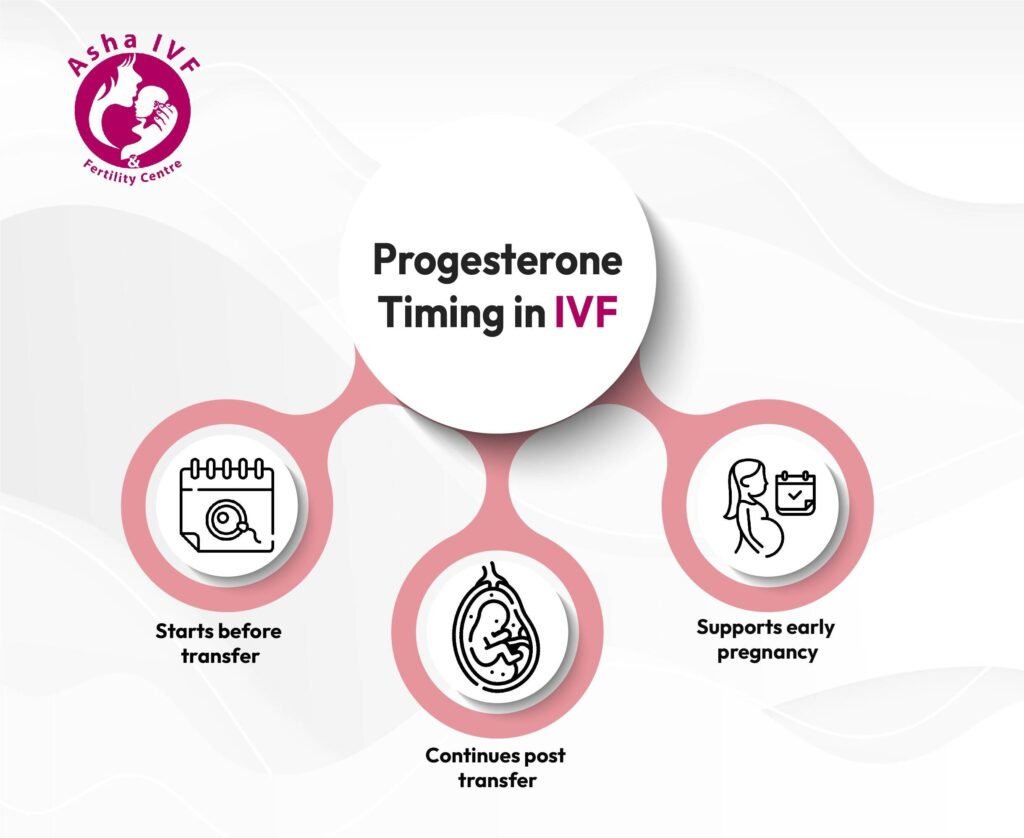
Before embryo transfer:
Progesterone is introduced as part of the IVF protocol to support the endometrial lining and prepare it for embryo implantation. The hormone’s action starts soon after egg retrieval and fertilization to optimize conditions for embryo implantation.
After embryo transfer:
Progesterone supplementation continues until the pregnancy is confirmed. If successful, it continues until the placenta takes over hormone production, typically by the 10th week of pregnancy.
Understanding the 4 stages of implantation is crucial for IVF success, learn how they impact the embryo’s journey to the uterus.
Different Forms of Progesterone in IVF Treatment
Progesterone can be administered in several forms, each suited to specific patient needs:
- Injections: Oil-based injections provide a steady release into the bloodstream. This method is most commonly used for fresh IVF cycles.
- Vaginal Progesterone: Vaginal tablets or suppositories are commonly used due to their localized absorption and higher comfort level for patients.
- Oral Pills: These are rarely used because of poor absorption rates but can be an option for some patients.
- Transdermal Patches: These are less frequently used due to variability in absorption rates.
Who it’s best for:
- Injections: Preferred for patients needing consistent hormone levels.
- Vaginal Progesterone: Ideal for those seeking a more comfortable option.
Dosage, Monitoring, and Factors Affecting Progesterone Use in IVF
Dosage and monitoring are key components of IVF success. Progesterone levels are checked regularly to ensure that they remain optimal for embryo implantation. Personalized protocols are developed by fertility specialists based on individual needs, such as:
- Absorption rates
- Tolerance to various administration methods
- The specific IVF treatment protocol
By adjusting dosages based on these factors, doctors ensure that progesterone levels remain effective throughout the IVF process.
The Crucial Role of Progesterone in IVF Success
Progesterone is essential for IVF success, ensuring the uterine lining remains optimal for embryo implantation and early pregnancy development. By maintaining the right progesterone levels, fertility specialists enhance the implantation window, supporting successful embryo attachment and reducing miscarriage risks. Progesterone supplementation is crucial throughout the IVF process, from embryo transfer until the placenta takes over hormone production. Monitoring and adjusting progesterone levels helps maximize IVF success rates and supports embryo growth, improving the chances of a healthy pregnancy. Ensure progesterone is managed carefully for the best IVF outcomes.
Asha IVF & Fertility Centre: Your Trusted IVF Partner
If you’re undergoing IVF and have questions about progesterone support, consult the fertility experts at Asha IVF & Fertility Centre, Faridabad, for a personalized treatment plan. With Dr. Astha Chakravarty leading the team, we provide compassionate, patient-centered care designed to give you the best chance at successful conception.
FAQ
1. Why is progesterone important after embryo transfer?
Progesterone maintains the uterine lining, ensuring an optimal environment for embryo implantation and survival.ith adenomyosis.
2. What are normal progesterone levels during IVF?
Normal progesterone levels vary based on the patient and treatment stage but are typically monitored to ensure they support embryo implantation
3. What are the side effects of progesterone injections?
Common side effects include bloating, mood swings, and injection site discomfort, which are usually temporary and manageable.
4. How long should progesterone be taken after IVF?
Progesterone is typically continued until the pregnancy test and, if successful, until the 10th week of pregnancy.
5. Can IVF succeed without progesterone support?
Progesterone is essential for the success of IVF. Without it, the uterine lining may not support the embryo properly, reducing the chances of implantation.