
Have your periods felt different since your C-section, longer spotting, unexplained discharge, or difficulty conceiving, but you’ve been told everything looks “normal”?
For many women, these subtle changes are easy to dismiss. After all, cesarean deliveries are common and often medically necessary. Most women recover smoothly without long-term complications.
However, in some cases, a small defect may develop at the site of the uterine incision. This condition is known as isthmocele, also referred to as a cesarean scar defect.
Because early signs of isthmocele may be mild or mistaken for routine post-pregnancy changes, isthmocele often goes undiagnosed. Recognizing the early signs of isthmocele is important, especially if you are experiencing abnormal bleeding, pelvic discomfort, oinfertility after C-section.
At Asha IVF, our goal is to provide medically accurate, evidence-based, and compassionate guidance so patients can make informed decisions about their reproductive health.
What Is Isthmocele (Cesarean Scar Defect)?
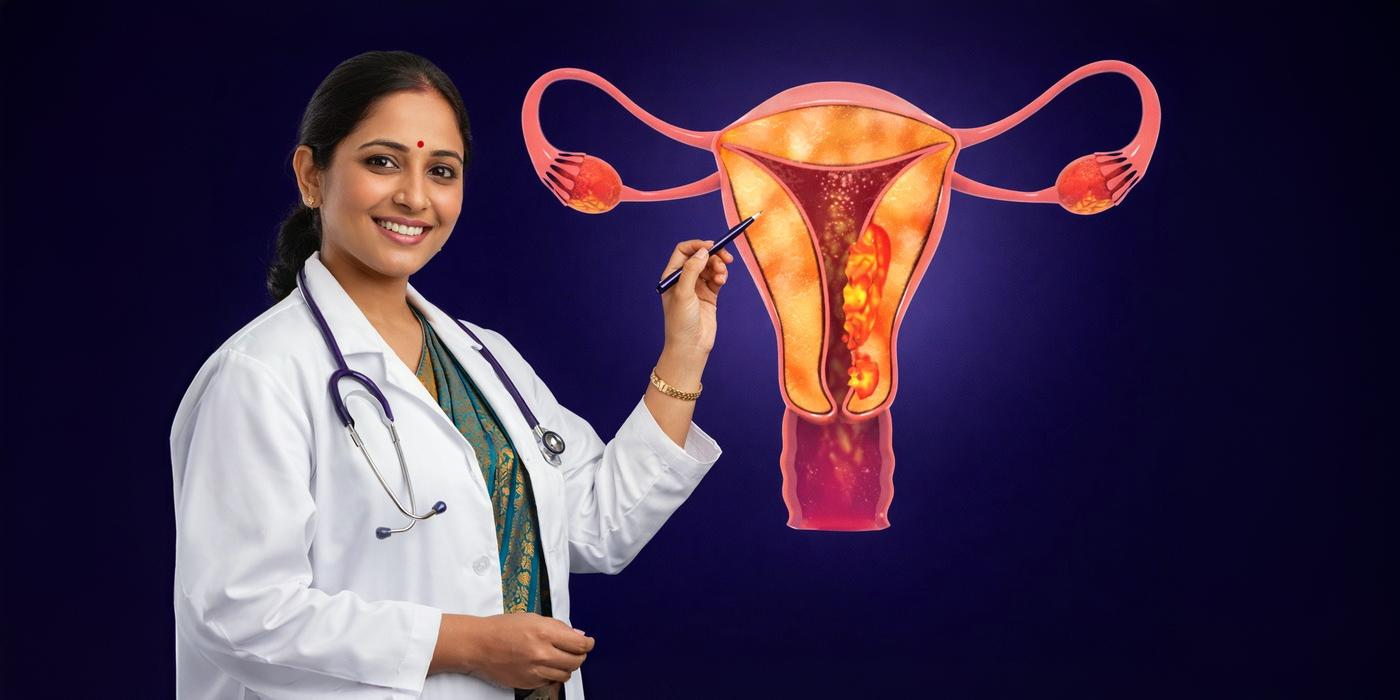
Isthmocele is a pouch-like indentation or thinning in the lower part of the uterus at the site of a previous C-section scar. It occurs when the uterine muscle does not heal completely after surgery, leaving a small niche or pocket in the scar.
This niche may collect menstrual blood, which can lead to:
- Prolonged or irregular bleeding
- Post-menstrual spotting
- Pelvic discomfort
- Secondary infertility in some cases
It is important to emphasize that not every C-section results in isthmocele, and many women with a cesarean scar defect have no symptoms at all.
Why Does Isthmocele Develop After a C-Section?
The exact cause of isthmocele after C-section can vary. Several factors may contribute to incomplete healing of the uterine incision, including:
- Multiple cesarean deliveries
- Surgical closure technique
- Infection during the healing phase
- Poor tissue healing
- A retroverted (tilted) uterus in some women
- Very low placement of the uterine incision
Having more than one C-section can raise the chance of scar-related changes, but most women who have had a cesarean do not develop serious problems with their scars.
Knowing about these risk factors can help prevent unnecessary worry. A cesarean scar defect is a known complication after a C-section, but it does not happen to everyone.
Early Signs and Symptoms of Isthmocele
The early signs of isthmocele are often mild and may develop gradually. In some women, the condition is discovered during fertility evaluation rather than through obvious symptoms.
Abnormal Uterine Bleeding
Persistent irregular bleeding beyond the normal menstrual period is one of the most common signs of isthmocele. Women may notice:
- Brown discharge after periods
- Light spotting that lasts several days
- Delayed clearing of menstrual blood
This occurs because blood may accumulate in the scar niche and drain slowly.
Post-Menstrual Spotting
Spotting that continues several days after menstruation ends is a key clinical sign of a cesarean scar defect. When this becomes a recurring pattern, evaluation is recommended.
Pelvic Pain
Some women report:
- Chronic lower abdominal discomfort
- Pain during menstruation
- Pain during intercourse
However, many women with isthmocele do not experience significant pain.
Secondary Infertility
In some cases, infertility after C-section may be associated with isthmocele. The collected blood and local inflammation in the scar pocket can:
- Alter the uterine environment
- Interfere with sperm movement
- Affect embryo implantation
It is important to note that infertility has multiple potential causes. Isthmocele is one possible contributing factor and should be evaluated as part of a comprehensive fertility assessment.
Symptomatic vs Asymptomatic Isthmocele
Not all cesarean scar defects require treatment. Management depends on symptoms, fertility goals, and clinical findings.
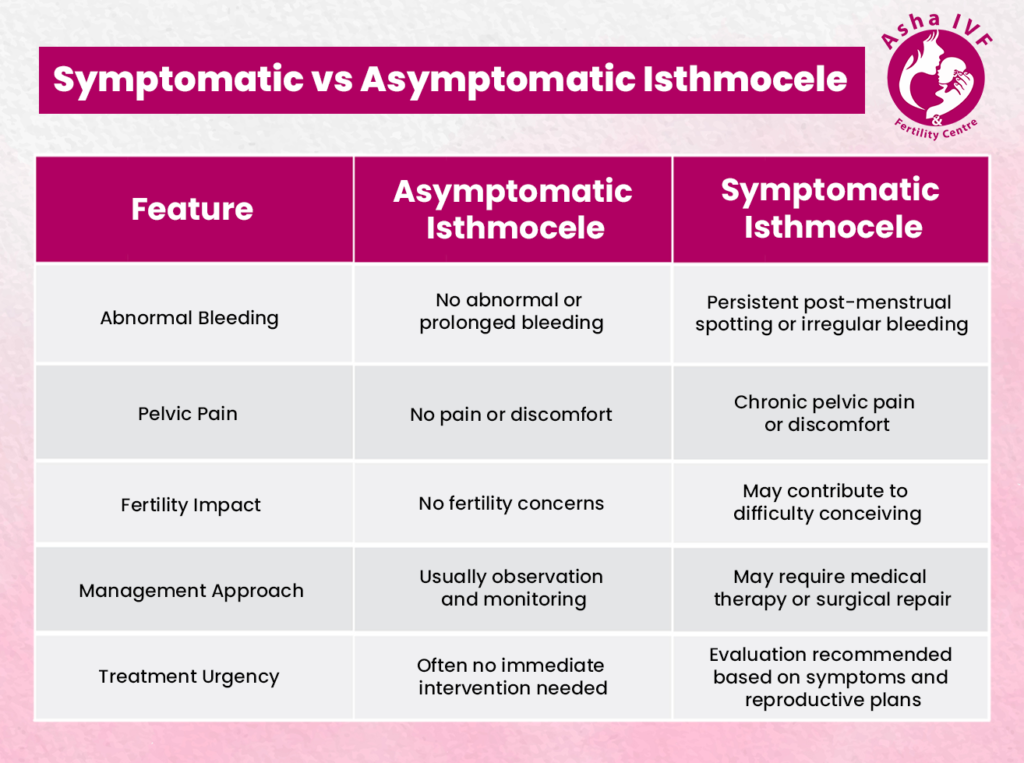
A careful clinical evaluation helps determine whether simple monitoring is sufficient or if treatment is medically appropriate.
At Asha IVF, each case of isthmocele is assessed individually, considering symptoms, scar depth, uterine thickness, and future pregnancy plans, so that treatment is recommended only when truly necessary and aligned with your long-term reproductive goals.
When Should You Consult a Specialist?
You should consider consulting a gynecologist or fertility specialist if you experience:
- Recurrent post-menstrual spotting
- Unexplained abnormal bleeding
- Persistent pelvic pain
- Difficulty conceiving after a C-section
- Recurrent early pregnancy loss
If you have had a cesarean delivery and notice changes in your menstrual pattern or face challenges conceiving, a specialist evaluation can help determine whether isthmocele may be involved.
How Is Isthmocele Diagnosed?
Diagnosis typically involves imaging studies to evaluate the uterine scar.
Transvaginal Ultrasound
This is usually the first-line investigation. It can identify thinning or a niche in the lower uterine segment.
Sonohysterography
In this procedure, saline is introduced into the uterus during an ultrasound to provide clearer visualization of the defect.
Hysteroscopy
A minimally invasive procedure in which a small camera is inserted into the uterus to examine the cesarean scar defect directly. It also allows for simultaneous treatment in selected cases.
The choice of diagnostic method depends on the signs of isthmocele and clinical findings.
Treatment Options for Isthmocele
Isthmocele treatment is individualized. It depends on:
- Severity of symptoms
- Size and depth of the defect
- Thickness of the remaining uterine wall
- Future pregnancy plans
Conservative Management
For mild signs of isthmocele, hormonal therapy may help regulate abnormal bleeding.
Hysteroscopic Repair
A minimally invasive procedure performed through the vaginal route. It removes fibrotic tissue and improves drainage of retained menstrual blood.
Laparoscopic Repair
Recommended in selected cases, particularly when the uterine wall is significantly thinned or when fertility optimization is a priority.
Surgery is considered only when clinically indicated. Many women with small or asymptomatic defects do not require surgical intervention.
Can Isthmocele Affect Future Pregnancy?
In some cases, isthmocele may:
- Contribute to infertility after C-section
- Interfere with embryo implantation
- Increase the risk of cesarean scar pregnancy (rare)
However, many women with small or treated defects conceive successfully.
Careful evaluation before planning pregnancy helps reduce potential risks and supports safer reproductive outcomes.
How Asha IVF Approaches Isthmocele Treatment
At Asha IVF, evaluation of isthmocele is comprehensive and patient-centered. Under the guidance of Dr. Astha Chakravarty, a specialist in reproductive medicine and minimally invasive gynecological surgery, patients receive:
- Detailed imaging assessment
- Individualized fertility evaluation
- Evidence-based treatment planning
- Transparent discussion of risks and expected outcomes
Treatment recommendations are made only when medically appropriate, with careful consideration of each woman’s symptoms and future reproductive goals.
Our approach prioritizes safety, clarity, and long-term uterine health.
Conclusion
Isthmocele is an under-recognized but manageable condition that may explain persistent spotting or infertility after C-section. Early awareness allows timely evaluation and appropriate care.
If you have had a C-section and are experiencing unusual bleeding or difficulty conceiving, consulting a fertility specialist can help clarify the cause.
Schedule a consultation at Asha IVF to discuss personalized treatment options based on your symptoms and reproductive goals.

Frequently Asked Questions
1. What are the early signs of isthmocele?
The early signs of isthmocele often include prolonged post-menstrual spotting, brown discharge after periods, mild pelvic discomfort, and irregular bleeding. Because these symptoms can be subtle, many women mistake them for routine hormonal changes.
2. What are the common signs of isthmocele after a C-section?
Common signs of isthmocele after a C-section include persistent spotting, abnormal uterine bleeding, pelvic pain, and in some cases, difficulty conceiving. Not all women experience symptoms, which is why proper evaluation is important.
3. How do isthmocele signs affect fertility?
Certain isthmocele signs, such as chronic inflammation or retained menstrual blood in the scar niche, may alter the uterine environment. In some women, this can interfere with sperm movement or embryo implantation.
4. Can early signs of isthmocele be mistaken for normal post-C-section changes?
Yes, early signs of isthmocele are often mild and may resemble typical post-pregnancy menstrual changes. A specialist should evaluate persistent spotting or irregular bleeding beyond a few cycles.
5. When should I see a doctor if I notice signs of isthmocele?
If signs of isthmocele, such as recurrent spotting, unexplained pelvic pain, or infertility after C-section, persist for several cycles, consulting a gynecologist or fertility specialist can help determine the underlying cause.